




Coronary Artery Bypass Surgery
Restoring Blood Flow to the Heart Muscle
Coronary artery bypass grafting (CABG) creates new routes for blood to reach the heart muscle when the coronary arteries are significantly blocked or narrowed. A healthy vessel taken from another part of the body bypasses the blocked segment.
Whether bypass surgery is the right option depends on your angiography, heart function, symptoms and overall health.
A Detour Around the Blockage
The graft carries blood from the aorta to the coronary artery beyond the narrowed segment, so the heart muscle receives blood again.
When Bypass Surgery May Be Considered
Surgery is one option among several. The decision follows a detailed cardiac evaluation.
Plaque narrows the artery opening
Multiple blocked arteries
Significant narrowing in more than one coronary artery.
Left main artery disease
Narrowing of the main artery supplying a large part of the heart.
Persistent chest pain
Angina not adequately controlled with medicines.
Reduced heart function
Weakened pumping linked to coronary artery disease.
Stents not suitable
Anatomy or earlier stents where surgery may work better.
Diabetes with multi-vessel disease
A group in which surgery is often discussed.
Types of Bypass Surgery
The technique and graft choice are planned for each patient.
On-Pump CABG
Done with a heart-lung machine while the heart is temporarily still.
HOVER OR TAP TO FLIPOn-Pump CABG
Circulation is supported by a heart-lung machine while the surgeon sews the grafts onto a still heart.
Off-Pump CABG
Performed on the beating heart in selected patients.
HOVER OR TAP TO FLIPOff-Pump CABG
Grafts are placed while the heart keeps beating. It suits selected patients and anatomy, as advised by your surgeon.
Minimally Invasive
Smaller incisions for suitable, limited disease.
HOVER OR TAP TO FLIPMinimally Invasive
Smaller incisions are used instead of a full chest opening. It is considered only for suitable, limited disease.
Graft Selection
Chest wall (mammary) artery, radial artery or leg vein grafts.
HOVER OR TAP TO FLIPGraft Selection
The chest wall (mammary) artery is commonly used, and radial artery or leg vein grafts may add further bypasses.
Detailed Evaluation Before Surgery
ECG & Stress Test
Heart rhythm and response to exertion.
Echocardiography
Ultrasound of heart structure and pumping.
Coronary Angiography
Shows the location and severity of blockages.
Blood Tests
General fitness and risk assessment.
Recovery & Follow-Up
Recovery varies between individuals and is guided by regular follow-up.
-
01
Evaluation & Planning
-
02
Bypass Surgery
-
03
ICU & Monitoring
-
04
Cardiac Rehabilitation
-
05
Long-Term Follow-Up
Frequently Asked Questions
What is coronary artery bypass surgery?
It is an operation that reroutes blood around blocked coronary arteries using grafts, so the heart muscle receives more blood.
Does everyone with a blocked artery need bypass surgery?
No. Some patients do well with medicines or angioplasty. Your surgeon and cardiologist advise based on your tests and health.
How long does recovery take?
Recovery differs for each person. Your team will guide you on rest, walking, rehabilitation and follow-up visits.
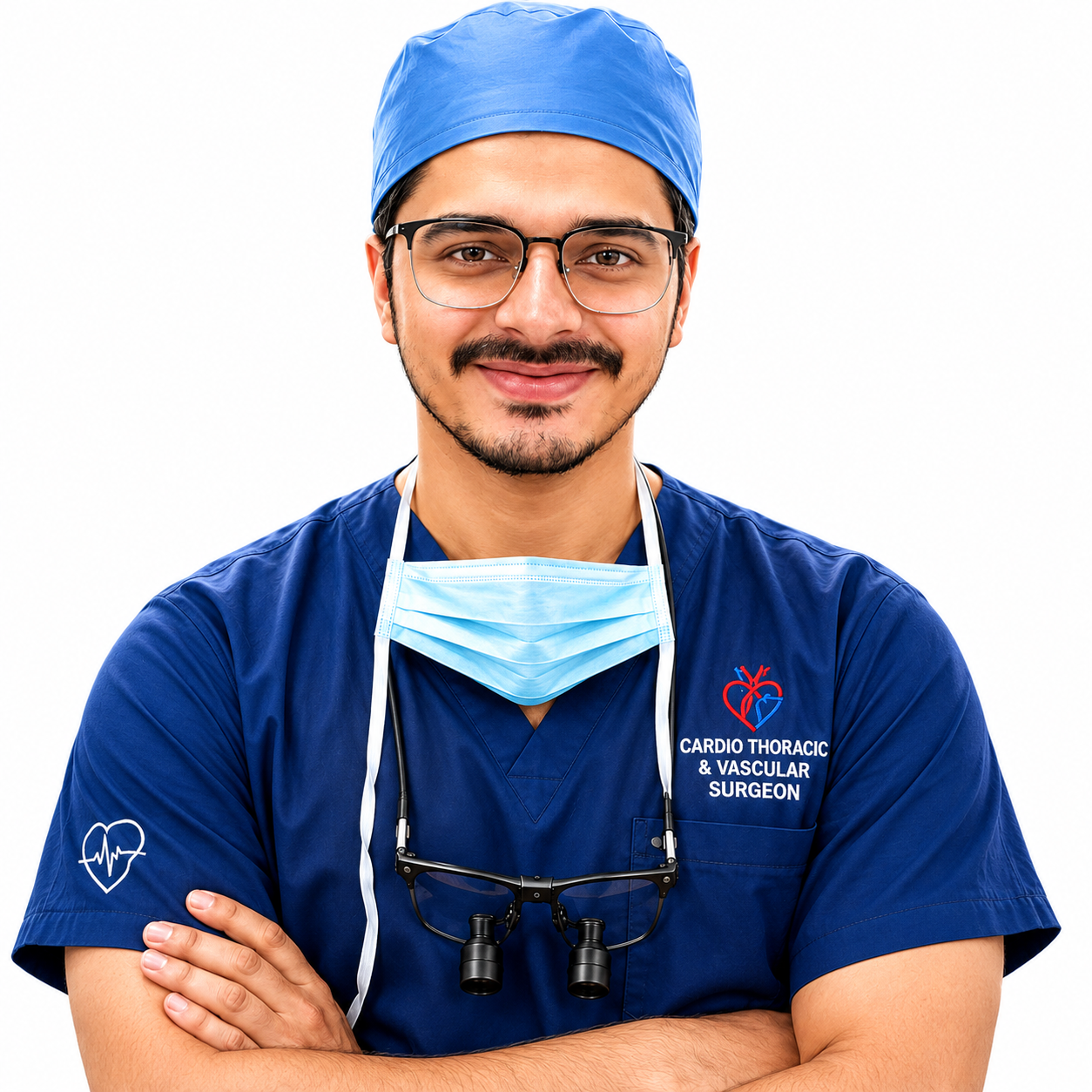
Dr. Dipti Ranjan Dhar
Cardio-Thoracic & Vascular Surgeon
Specialized cardiac, thoracic and vascular surgical care with an emphasis on careful evaluation, precise treatment planning and personalized patient care.
Phone: 9853907596Your Heart Deserves Specialized Care
A detailed cardiac assessment can help determine the severity of coronary artery disease and the right treatment option for you.
Dr. Dipti Ranjan Dhar · Cardio-Thoracic & Vascular Surgeon · 9853907596