



The aorta is the largest artery in your body. It carries oxygen-rich blood from the heart to every organ. When a section of it becomes weak, enlarged, or torn, the risk is serious, because a ruptured or dissected aorta is a life-threatening emergency. Aortic replacement surgery replaces the damaged part of the aorta with a strong graft, restoring safe blood flow and protecting you from sudden catastrophe.
In this guide, we explain when the surgery is needed, the main types, how the procedure is done, the risks, and what recovery looks like.
What Is Aortic Replacement Surgery?
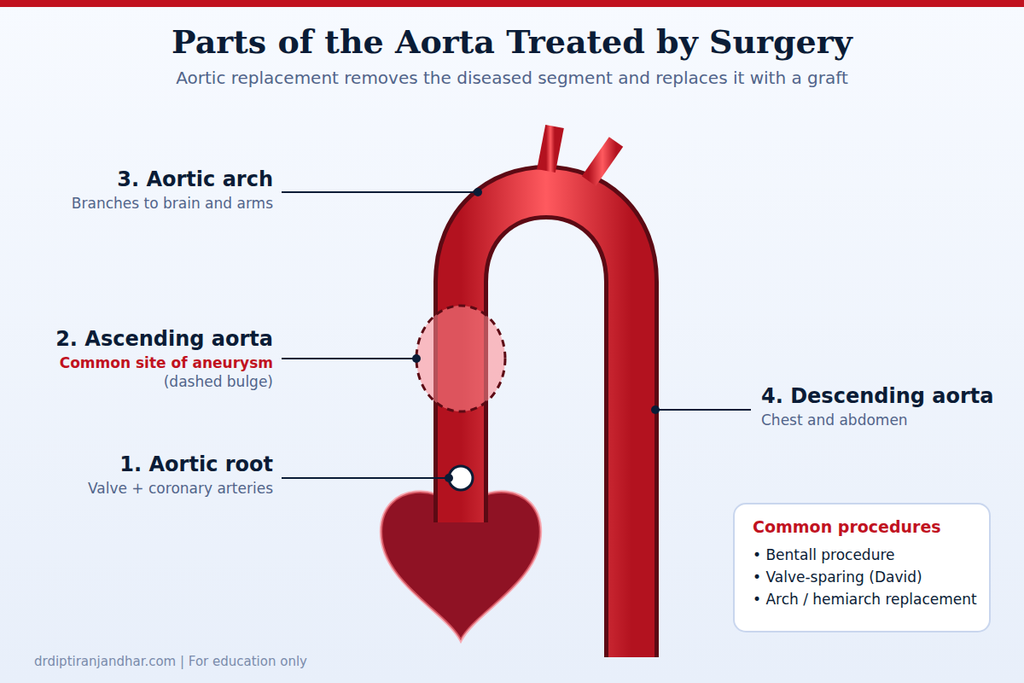
Aortic replacement is an open-heart procedure in which the surgeon removes the diseased section of the aorta and replaces it with a durable synthetic (Dacron) graft. Depending on which part is affected, the surgery may involve:
- Ascending aorta replacement: the section rising from the heart
- Aortic root replacement: the base of the aorta, where it meets the heart and holds the aortic valve
- Aortic arch replacement: the curved section that supplies blood to the brain and arms
- Descending or thoracoabdominal aorta repair: the lower sections running through the chest and abdomen
Who Needs Aortic Replacement Surgery?
Your cardiac surgeon may recommend surgery if you have:
- Thoracic aortic aneurysm: a bulge in the aortic wall, usually considered for surgery once it reaches around 5.0–5.5 cm (lower in some patients)
- Aortic dissection: a tear in the inner wall of the aorta, often an emergency
- Rapidly growing aneurysm, even if it is still below the usual size threshold
- Connective tissue disorders such as Marfan syndrome, which weaken the aortic wall
- Bicuspid aortic valve with an enlarged aorta
- Severe aortic valve disease along with aortic root dilation
- Aortic infection or injury
Symptoms You Should Not Ignore
Many aortic aneurysms cause no symptoms until they are large, which is why they are called a “silent” condition. Warning signs may include:
- Chest, jaw, neck, or back pain
- Shortness of breath
- Hoarseness or difficulty swallowing
- Persistent cough
Sudden, severe tearing chest or back pain is an emergency. Go to the nearest hospital immediately.
Types of Aortic Replacement Procedures
1. Bentall procedure. The aortic root, aortic valve, and part of the ascending aorta are replaced together with a composite valve-graft. The coronary arteries are reconnected to the new graft. This is common when both the valve and the aorta are diseased.
2. Valve-sparing root replacement (David / Yacoub procedures). The aortic root is replaced, but your own healthy aortic valve is preserved. This can avoid the need for lifelong blood thinners that come with mechanical valves, and suits carefully selected, usually younger, patients.
3. Ascending aorta and hemiarch replacement. The enlarged ascending aorta and part of the arch are replaced with a graft.
4. Total arch replacement. For more extensive disease, the entire arch is replaced, with the brain-supplying vessels reconnected to the graft.
5. Descending and thoracoabdominal aortic repair. Used for disease in the lower chest and abdominal segments of the aorta.
Your surgeon chooses the technique after reviewing your scans, valve condition, age, and overall health.
How Is the Diagnosis Made?
- Echocardiography: checks aortic size and valve function
- CT aortogram: gives a detailed 3D view of the entire aorta
- MRI angiography: used for follow-up and for patients who should avoid radiation
- Blood tests and ECG, and sometimes coronary angiography before surgery
What Happens During Surgery?
The operation is done under general anaesthesia, usually through a sternotomy (an incision along the breastbone). The heart is temporarily supported by a heart-lung machine. The surgeon removes the diseased aortic segment, sews in the graft, and reconnects any affected structures such as the valve or coronary arteries. Surgery generally takes several hours, and you wake up in the cardiac ICU.
Risks and Complications
Aortic surgery is a major operation, and in experienced hands, outcomes are good, especially when it is planned in advance rather than done as an emergency. Possible risks include bleeding, infection, irregular heart rhythm, kidney problems, stroke, and, rarely, death. Planned (elective) surgery carries far lower risk than emergency surgery for a ruptured or dissected aorta, which is a strong reason not to delay a recommended operation.
Recovery After Aortic Replacement
- Hospital stay: typically about a week or more, including 1–3 days in ICU
- Early recovery: walking begins within days, with breathing exercises and physiotherapy
- Back to light activity: around 4–6 weeks
- Full recovery: usually around 2–3 months, depending on the extent of surgery
- Follow-up: regular check-ups and periodic imaging for life
- Medicines: if you receive a mechanical valve, you will need lifelong blood thinners
Avoid heavy lifting and strenuous exertion until your surgeon clears you. Blood pressure control is essential after surgery.
How to Lower Your Risk of Aortic Disease
- Keep blood pressure well controlled
- Do not smoke
- Maintain a healthy weight and lipid profile
- Get screened if you have a family history of aortic aneurysm or a connective tissue disorder
- Attend regular follow-ups if you have a known aortic enlargement
Why Choose Dr. Dipti Ranjan Dhar for Aortic Surgery in Bhubaneswar?
Aortic surgery demands careful planning, precision, and strong ICU support. Dr. Dipti Ranjan Dhar is a Cardio-Thoracic & Vascular Surgeon who consults at Sunshine Hospital, Bhubaneswar, offering evaluation and surgical treatment for aortic and other complex heart conditions, with clear communication at every step.
Concerned about an aortic aneurysm or have a scan report you don’t understand? Book an appointment on WhatsApp or visit the Aortic Replacement Procedure page.
Frequently Asked Questions
Is aortic replacement surgery a major operation? Yes, it is open-heart surgery, but it is well established, and planned surgeries have good outcomes in experienced hands.
How long does aortic replacement surgery take? Usually several hours, depending on how much of the aorta and whether the valve is involved.
What is the Bentall procedure? It replaces the aortic valve, the aortic root, and part of the ascending aorta together in a single operation.
Can an aortic aneurysm be treated without surgery? Small aneurysms are monitored with regular imaging and blood pressure control. Surgery is advised once the size or growth rate crosses the risk threshold.
How long is recovery? Most patients leave hospital in about a week and return to normal activity in 2–3 months.
What is the cost of aortic replacement surgery in Bhubaneswar? Cost depends on the procedure, the type of valve or graft, hospital stay, and room category. A consultation after reviewing your reports gives you an accurate estimate.
Disclaimer: This article is for general education and is not a substitute for medical advice. Please consult a qualified cardiac surgeon for your individual case.