




Your heart has four valves that open and close with every heartbeat, keeping blood flowing in the right direction. When a valve becomes narrow (stenosis) or leaky (regurgitation), the heart has to work harder, and over time this can lead to breathlessness, heart failure, and rhythm problems. Heart valve surgery repairs or replaces the damaged valve and restores normal blood flow.
In this guide, we explain when valve surgery is needed, the difference between repair and replacement, the types of valves, the risks, and what recovery looks like.
The Four Heart Valves
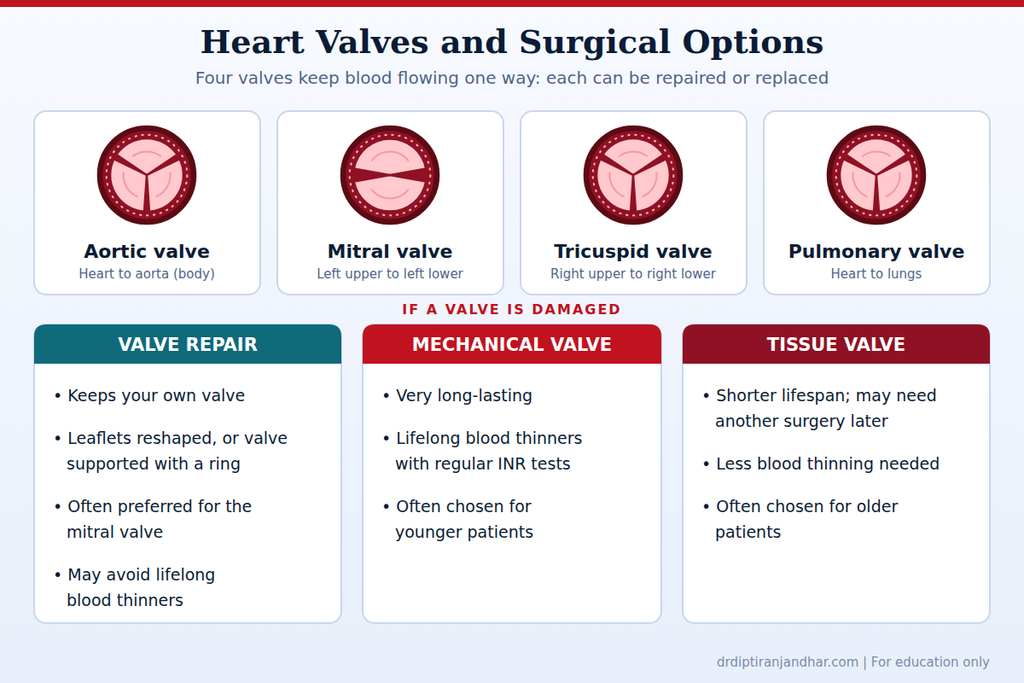
- Aortic valve: between the heart and the aorta, which carries blood to the body
- Mitral valve: between the left upper and left lower chambers
- Tricuspid valve: between the right upper and right lower chambers
- Pulmonary valve: between the heart and the lungs
The aortic and mitral valves are the ones most commonly operated on.
Why Do Heart Valves Go Bad?
- Rheumatic heart disease, a common cause in India, usually starting from untreated throat infections in childhood
- Age-related wear and calcium build-up, especially in the aortic valve
- Congenital valve problems, such as a bicuspid aortic valve
- Infection of the valve (endocarditis)
- Previous heart attack or heart muscle changes that stretch the valve
- Connective tissue disorders
Symptoms of Valve Disease
Valve disease can develop slowly, and many people adapt without noticing. Symptoms may include:
- Breathlessness, especially on exertion or when lying flat
- Fatigue and weakness
- Chest pain or tightness
- Palpitations or irregular heartbeat
- Dizziness or fainting
- Swelling of the feet or ankles
Fainting, chest pain, or sudden severe breathlessness needs urgent medical attention.
How Is Valve Disease Diagnosed?
- Clinical examination, where the doctor listens for a murmur
- Echocardiography, the key test to see how the valve works and how the heart is coping
- ECG and chest X-ray
- Transoesophageal echo (TEE) for a closer look at the valve
- CT or cardiac MRI in selected cases
- Coronary angiography before surgery, to check the heart arteries
When Is Surgery Needed?
Mild valve disease is often monitored with regular check-ups and medicines. Surgery is usually advised when:
- The valve problem is severe, even if symptoms are still mild
- You have symptoms such as breathlessness, chest pain, or fainting
- Tests show the heart is enlarging or weakening because of the valve
- There is infection of the valve that antibiotics alone cannot control
The timing matters. Operating too late can leave permanent damage to the heart muscle, so regular follow-up is important.
Valve Repair vs Valve Replacement
Valve repair keeps your own valve and fixes it, for example by reshaping the leaflets or supporting the valve with a ring. Repair is often preferred for the mitral valve when possible, because it preserves your natural valve and heart function, and may avoid lifelong blood thinners.
Valve replacement removes the damaged valve and replaces it with an artificial one. It is used when the valve is too damaged to repair, as is common in the aortic valve and in advanced rheumatic disease.
Your surgeon decides after reviewing your echo and other tests. Sometimes the final decision is made during surgery, once the valve can be seen directly.
Types of Replacement Valves
| Mechanical valve | Tissue (bioprosthetic) valve | |
| Material | Durable metal/carbon | Animal tissue |
| Lifespan | Very long, often lifelong | Shorter, may need replacement later |
| Blood thinners | Needed for life | Often needed only for a short time |
| Best suited for | Younger patients | Older patients, or those who can’t take blood thinners |
Choosing between them depends on your age, lifestyle, other medical conditions, and whether you can safely take blood thinners and have regular blood tests. This is a decision to make together with your surgeon.
What Happens During Surgery?
Valve surgery is usually performed under general anaesthesia through an incision in the chest. The heart is temporarily supported by a heart-lung machine while the surgeon repairs or replaces the valve. Some valve operations can be done through smaller incisions in selected patients. Surgery usually takes a few hours, and you recover first in the cardiac ICU.
Risks and Complications
Valve surgery is a major operation, but outcomes are good in experienced hands, especially when it is planned in time. Possible risks include bleeding, infection, irregular heart rhythm, kidney problems, stroke, and, rarely, death. After a mechanical valve, there is also a risk of blood clots or bleeding if blood thinners are not well controlled. Planned surgery carries lower risk than emergency surgery, which is why delay is not advisable once surgery has been recommended.
Recovery After Valve Surgery
- Hospital stay: usually about a week, including 1-3 days in ICU
- Early recovery: walking begins within a day or two, with breathing exercises and physiotherapy
- Return to light activity: around 4-6 weeks
- Full recovery: usually 2-3 months
- Blood thinners: lifelong for mechanical valves, with regular INR tests
- Follow-up: regular echo and check-ups to make sure the valve works well
Avoid heavy lifting until your surgeon clears you. Take medicines exactly as advised and never stop blood thinners on your own.
Living Well With a New Valve
- Take blood thinners on time and keep INR checks regular, if you have a mechanical valve
- Tell your dentist and other doctors about your valve before any procedure
- Maintain good dental hygiene, as mouth infections can spread to the heart
- Treat sore throats and infections promptly
- Eat a heart-healthy diet and stay active as advised
- Do not smoke, and keep blood pressure and sugar controlled
Why Choose Dr. Dipti Ranjan Dhar for Heart Valve Surgery in Bhubaneswar?
Valve surgery needs careful decision-making, precise technique, and strong ICU care. Dr. Dipti Ranjan Dhar is a Cardio-Thoracic & Vascular Surgeon who consults at Sunshine Hospital, Bhubaneswar. He treats valve and other heart conditions and takes the time to explain each option, including repair, replacement, and the choice of valve, so patients and families can decide with confidence.
Told you have a leaking or narrow valve? Book an appointment on WhatsApp or visit the Valve Repair & Replacement Surgery page.
Frequently Asked Questions
Is heart valve surgery a major operation?
Yes, it is open-heart surgery, but it is very well established and gives good results when done at the right time.
Which is better, valve repair or replacement?
Repair is preferred when possible, especially for the mitral valve, because it keeps your own valve. When the valve is too damaged, replacement is the safer option.
Mechanical or tissue valve: which should I choose?
Mechanical valves last longer but need lifelong blood thinners. Tissue valves usually need less blood thinning but may wear out sooner. Your age and health decide the best choice.
How long does a replacement valve last?
Mechanical valves are designed to last a lifetime. Tissue valves typically last many years but may need replacement later.
How long is recovery after valve surgery?
Most people go home in about a week and return to normal activity in 2-3 months.
What is the cost of valve replacement surgery in Bhubaneswar?
It depends on the type of valve, whether it is repair or replacement, hospital stay, and room category. A consultation after reviewing your echo and reports gives you an accurate estimate.
Disclaimer: This article is for general education and is not a substitute for medical advice. Please consult a qualified cardiac surgeon for your individual case.